
Expo & conference podcast· 22 min
Starting an AEC podcast? Why there is zero competition – Matthew Byrd, RCN
Watching here? Subscribe on YouTube.Get the next 2D Is Against My Religion episode in your YouTube feed.
SubscribeListen to the audio
Summary
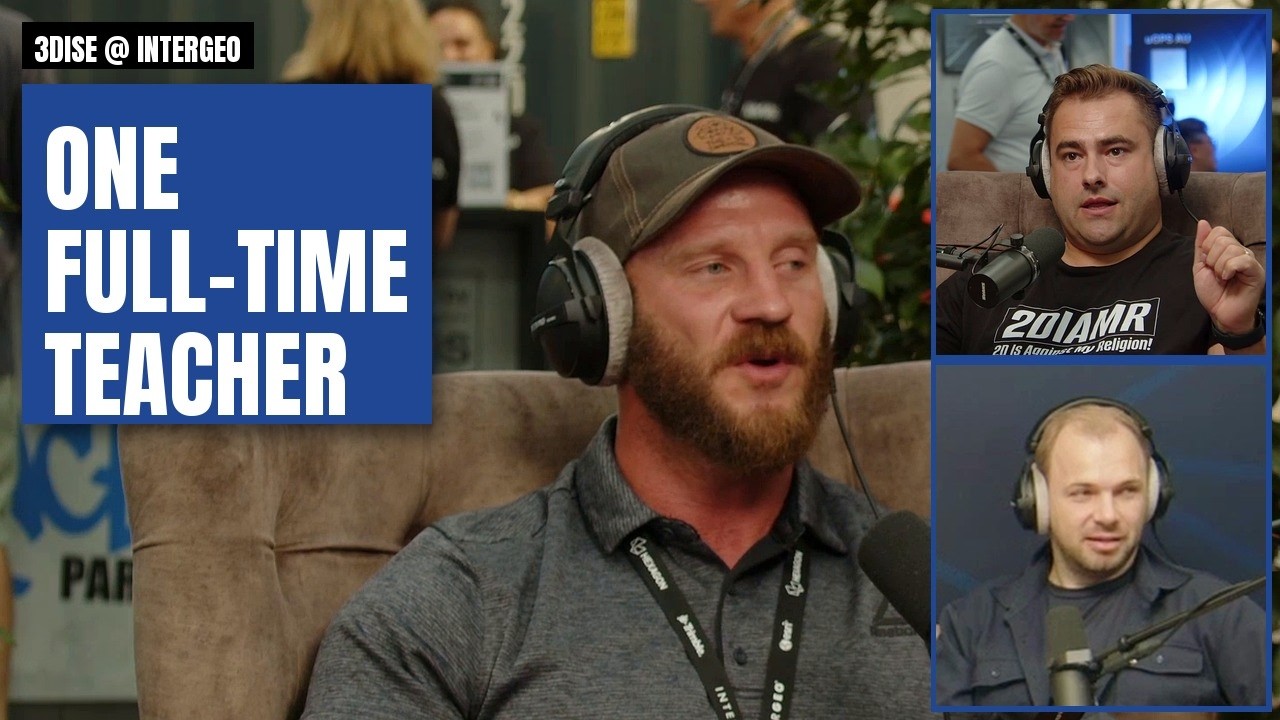
Recorded live at INTERGEO 2026, Matthew Byrd, founder of RCN and the R-CON conference, talks with Michal Gula and Tomáš Barnáš about the silent majority that watches industry content without reacting, why there is zero competition among AEC podcasts, why guests never get the questions in advance, how a salmon fishing trip with Chris Do became a sold-out retreat for business owners, and what changes at R-CON in Boise.
Key ideas
- 1According to Matthew Byrd, many people watch industry content without ever engaging and walk up years later to say they have followed for a long time; Michal Gula adds that the clients rarely come from those who like and comment, so a rough rule is to multiply the reactions by four.
- 2Matthew tells anyone starting a podcast that there is zero competition: according to Matthew, even 10,000 podcasts in the niche would leave room, because personalities and niches differ, the industry counts tens of millions of people across construction, engineering and architecture, and people keep reading another book on the same topic.
- 3Matthew's podcast conversations run about an hour to an hour and a half with no structure; according to Matthew, guests who ask for the questions in advance get none, because the unfiltered conversation brings out what a pre-planned one does not.
- 4The salmon fishing trip started as Chris Do's invitation; according to Matthew, it became a co-hosted week at a remote lodge in Canada with no cell service for 25 people, sold out, and already has more applicants for 2027 than places.
- 5R-CON moves to a new venue in Downtown Boise with its first official expo hall and 70 plus vendors, according to Matthew, and Chris Do will run a workshop at the VIP dinner.
Quotes
“There's a lot of people that watch, you have no idea they're watching.”
“And even more important is that rarely those who comment and like your posts are actually your clients.”
“You're never gonna write the first of a book.”
“I don't send anything. It's gonna be very organic. I'll drive the conversation.”
“It only fits 25 people.”
Quoted in tech guides
Questions answered
- Is there too much competition to start a podcast in the AEC and surveying industry?
- No, according to Matthew Byrd of RCN: even 10,000 podcasts in the niche would leave room, because personalities and niches differ and people happily follow several shows.
- Do the people who like your LinkedIn posts become your clients?
- Rarely, according to Michal Gula: clients usually come from the silent majority who read without reacting; Matthew Byrd adds that people often say years later they have followed all along.
- Should podcast guests get the questions in advance?
- Matthew Byrd sends nothing in advance: according to Matthew, an unstructured hour or more of conversation brings out what a pre-planned interview does not.
- How do you find good podcast guests and speakers?
- According to Matthew Byrd, an easy way is to watch other media and channels, see who speaks well there and vet them on someone else's show first.
- What is new at R-CON in Boise?
- According to Matthew Byrd, a brand-new venue in Downtown Boise, the first official expo hall with 70 plus vendors, and a workshop by Chris Do at the VIP dinner.
Chapters
Transcript
Full transcriptabout 19 min readShowHide
Transcribed automatically (ElevenLabs Scribe) and lightly edited. It may contain small errors in words or speaker names. Click a time to play the audio from there.
Tomáš Barnáš: We're, we're just talking to Matthew Byrd, the founder of RCN and, R-CON Conference, just for those who don't know you. Uh-
Matthew Byrd: Hey, thanks.
Tomáš Barnáš: just so we have also intro. So that, that's the, that's the question, like when you were like going through the, halls and, and the, around the exhibitors, like has anybody like noticed you and recognized you?
Matthew Byrd: A lot, yeah.
Michal Gula: Yeah.
Matthew Byrd: Which, which has been fun. and there's been several that are from the States. and then there's been a number of people that, that I don't know that, that walk up and recognize RCN or... And it's, it is funny. You know, we're in this space, right? That we do content, we do media. And so you start to build some level of recognition or following in the industry that is... It, it continues to grow outside of your little circle, and, it's really cool to see that. We, even in the airport on the way here, a guy standing right in line behind us was like, "Are you Matt Byrd with RCN?" and my immediate assumption was like, okay, we're gonna start seeing people 'cause there's so many people coming to INTERGEO. And I was like, "Are you going to the conference?" He's like, "What conference?" I was like, "There's no way you're traveling here. You're standing in line behind us. You're not going to the event." He's like, "No, I'm on vacation. I just so happen to be standing behind you." that is a really weird feeling, but it's also cool to see that, you know, the, the more that we build the, the content, the education, the events, it's... People are watching. And even from the com- content conversation, I tell people that all the time too, of like even when you don't get tons of engagement or you're like, "Ah, how many views am I really getting?" There's a lot of people that watch, you have no idea they're watching, and like years later they'll walk up and go, "I've been following you for a long time," and-
Michal Gula: This, this is very important and, and the very few people understand is that- majority of your followers and, and like actually people that consume your content, they are silent majority
Matthew Byrd: So silent
Michal Gula: Especially on LinkedIn. The statistics says that it's like maybe 60 to 70% are never giving you like, never giving you like, like, any comment-
Matthew Byrd: No
Michal Gula: anything.
Matthew Byrd: Yeah.
Michal Gula: And reading everything you, you-
Matthew Byrd: Yeah
Michal Gula: write or post.
Tomáš Barnáš: I can sign this. That was me before I met Michal. I was just watching, but not touching.
Michal Gula: Yep.
Matthew Byrd: Yeah, yeah.
Michal Gula: And, and even more important is that rarely those who comment and like your posts are actually your clients.
Matthew Byrd: Yeah.
Michal Gula: Usually the clientele is coming from those silent ones.
Matthew Byrd: Yeah. Yeah. Yeah.
Michal Gula: So that's very important to, to keep going even if you don't have enough likes-
Matthew Byrd: Yeah
Michal Gula: because at least, at least what you can do is like any reactions, any amount of reactions you have, just multiply it by four, for example, and you know that that's the amount of people that actually-
Matthew Byrd: Yeah
Michal Gula: read your post.
Matthew Byrd: Yep. Yeah, absolutely. Yeah.
Michal Gula: I got offended like the worst time the other day. I was, I was exchanging some messages with, Kelly Watt.
Matthew Byrd: Yeah.
Michal Gula: because, yeah, he, he, he wanted me to introduce to, to some friend of his, and he started with, the message like, "I told him that, you are like a Matthew Byrd of, of Europe."
Matthew Byrd: Offended.
Michal Gula: I, I, I texted him, "Okay, I think it's other way around," like Like, like Matthew is a-
Matthew Byrd: Let's have a battle here.
Michal Gula: Like Matthew is the Michal Gula of, of States.
Matthew Byrd: I, I, I, I have no fight. I, I support everybody.
Michal Gula: No, I, I was just kidding. Like, like he's a very nice guy, and then I actually like the, the comparison be- because I think that the both markets are, are very different.
Matthew Byrd: Yeah.
Michal Gula: Very big.
Matthew Byrd: Yeah.
Michal Gula: And it's not easy to be very well known on, on both sides of, of the ocean.
Matthew Byrd: Yeah, no. No, and it's, it's a very small world of people who make any level of content, let alone that become a big part of what they do. it's, it's very, very s- slim, especially in our niche. Like you don't, you don't find a lot of engineering, construction, surveying, you know, 3D mapping influencers or-
Michal Gula: Yeah
Matthew Byrd: which, you know, we could battle what that term means as well, but, it's, it's slim.
Michal Gula: Oh, we can, but the truth-... is that we are actually building the, the-
Matthew Byrd: Yeah
Michal Gula: the industry around this.
Matthew Byrd: Yeah, yeah.
Michal Gula: Like, because before we actually started to do content and, and building this influencing thing or whatever you wanna call it on, on LinkedIn, like there was no B2B-
Matthew Byrd: Yeah
Michal Gula: collaborations.
Matthew Byrd: Yeah, yeah.
Michal Gula: Like zero.
Matthew Byrd: Yeah.
Michal Gula: Like I have gone through so many different collaborations where the company, it doesn't matter how big, they were like, "Oh, we have never done this."
Matthew Byrd: Yeah.
Michal Gula: "So we need to like figure out what to expect, what to pay for it, what to like do, how to allow you to be free in your, conversations, in your messaging," right?
Matthew Byrd: Yep, yep.
Michal Gula: So, so we are like really building this.
Matthew Byrd: Yeah, it's true. Yeah.
Tomáš Barnáš: But I see also you two as like complementary, that, you are more like a knowledge sharing, more networking, topics, and, you Michal, you have more like devices, showcasing of the technology and, and discussion, so it would be even like-
Matthew Byrd: Yeah
Tomáš Barnáš: you are actually fulfilling each other's topic.
Matthew Byrd: Yeah.
Michal Gula: That's... I think that, that comes with, authenticity is, is, is, is the, is the name of it. but it's not saying that you are authentic, I'm not, or other way around. Like everybody has a different way of being authentic, right?
Matthew Byrd: Yeah.
Michal Gula: Because we have different personalities, we have different ways of how we talk, how we... the tone of voice and everything.
Matthew Byrd: Yeah.
Michal Gula: So even though we are both authentic at the highest possible level, even though we are knowlege- knowledgeable, we, we know our sh- not shit, but stuff. we, we still are very different of, how we communicate and, and, and what we do, so.
Matthew Byrd: Yeah. it's why I'm a huge fan of, like... I've had people ask over the years, after we started our podcast or something, someone would reach out that wanted to start a podcast, and they'd start with like, "I don't know if you're gonna be okay with this-... but I, I'm thinking about starting po-" And I'm like, I have no... I have... Again, I, I preach this a lot across everything I do. I'm like, "Zero competition." Like, the- you- we could have 10,000 podcasts in our, in our niche. There could be,.. You know, there's so much. There's so much to build around. D- personalities are different. Niches are different. It, it... There's so much room.
Michal Gula: But you know-
Tomáš Barnáš: No, this is-
Michal Gula: You know... Sorry. So, so just I wanted to add to that. You know why? Because once you build your audience, the audience does not really care who is your guest or what you're speaking about, whether you have, like, enough information about it. They are following and, and listening to you-
Matthew Byrd: Yeah
Michal Gula: because they like you as a, as a persona, as a, as a personality.
Matthew Byrd: Yeah.
Michal Gula: So that's, that's why it's, it really doesn't matter how many podcasts of, of-
Matthew Byrd: Yep
Michal Gula: in our industry there-
Matthew Byrd: Yep
Michal Gula: there are, because you either are likable, and people will like you and follow you or, or not, so.
Matthew Byrd: Yeah. Well, and even once you go to like, you know, stats or statistics, how many people are in our industry?
Michal Gula: Yeah, yeah.
Matthew Byrd: Hundreds of millions. How many fol-
Michal Gula: Not really.
Matthew Byrd: I mean, well, i- in total-
Michal Gula: They want to get there. It's just-
Matthew Byrd: Okay. You could easily say tens of millions across construction, engineering, architecture. I mean, it- that is a big industry, and, we are the technology, you know, focus within this built environment piece. That, that is broad, and again, how many followers do we each have? Not a million, not 5 million, not 10 mil- like it's, it's small.
Michal Gula: I actually did the research with, ChatGPT. I asked like-... like on several levels, a- and it said that my total addre- addressable market is like 500,000 or so-
Matthew Byrd: Mm, okay
Michal Gula: people.
Matthew Byrd: Yeah. Well, e- and even at that number, right, there's so much more room to growth. You know, whether you focus on a specific, area, you wanna develop geographic, you know, awareness, or it's industry in whole, there's so many directions to go with it. And it, and it takes a long time before a creator's going to hit that entire addressable market, no matter what their niche is. There's always room for growth.
Michal Gula: And you can see, for example, even on a, on the biggest podcasts, like, the, the same, guest can go to Joe Rogan, to go to Steven Bartlett a- and so on-
Matthew Byrd: Yeah
Michal Gula: and these will be different podcasts.
Matthew Byrd: Very.
Michal Gula: Very different.
Matthew Byrd: And people will watch all of them.
Michal Gula: Exactly.
Matthew Byrd: So it doesn't matter if there's more.
Michal Gula: Yeah.
Matthew Byrd: It's another place for them to go. It's another type of podcast that's structured differently. Like, there's, there's a never ending opt- I say the same thing to people about, that wanna write books, about authors. It's like, if you have an idea for a book and you think, "Oh, there's already a book on that," well, go look at how many books there are about every topic that exists already. People wanna read another one, and another one, and another one. They wanna keep learning forever, or they do it for fun. They're not gonna not read your book just because there's already one out there.
Tomáš Barnáš: Yeah.
Matthew Byrd: You're never gonna write the first of a book.
Tomáš Barnáš: But there's also another, point of view. You are doing podcasts, so you always say, like, people are there to watch you. But, I would also turn it around that if there is a guest who you like to watch and it go, he goes to you, then to you, then to another one-
Matthew Byrd: Yeah
Tomáš Barnáš: you are, you are not losing your audience. The person is just, like, following and watching what he wants.
Matthew Byrd: Yeah.
Tomáš Barnáš: So like-
Matthew Byrd: Which I think is a big part of the podcasting and the media and the content as well, is there's both sides. Some people follow it at first because they wanna learn from the guest. Some people really like the personality of the person, and it ends up being a whole mix of, like, why, why people decide to be-
Tomáš Barnáš: And also we are, we are coming with very different backgrounds, so-
Matthew Byrd: Yeah
Tomáš Barnáš: and, and very different interests. So if I'm asking some questions to the guest and, and Matthew is asking, we are asking-
Matthew Byrd: Asking different things
Tomáš Barnáš: them from very different angles.
Matthew Byrd: Yeah. Yeah, yeah.
Tomáš Barnáš: Yeah. That's, that's what I like. That's where... Th- that's why I also brought this, that-
Matthew Byrd: So we should steal-
Tomáš Barnáš: another person can go to-
Matthew Byrd: guests from each other. I, I am always a fan of it. I, you know, I... Yeah. It's great. It's a great place. When you start to source people, like, who should we bring as a speaker? Who should we have as a guest? It's like, an easy way to start is find other media or content or channels and see who's out there speaking, who's a advocate, who speaks well, you know, vet them from someone else's show before they come on your... You know, it's a great way to connect with people.
Tomáš Barnáš: So what's your favorite medium when you would say, like, for yourself? Because you have podcast, you have conference, you are doing, like, the events, fishing-... and, like, things like that, organized for people. Like, what, what's, what's your favorite one?
Matthew Byrd: Oh, that's really hard. They're all, they're all unique and, and special in a different way, and the thing that is common between all of those, between the pod- podcast, between the conference, between the fishing trip, the leadership retreat, it's all about getting to spend time with people in the industry and trying to create value for them. You know, the conference specifically is about trying to educate people about bringing together new technologies, sharing case studies, sharing insights. Podcast is like, that's a really special time to get to go deeper with one person. Every time I get someone that come in, like, Kelly Watt for instance, he was just in the podcast room a week or two ago. I've known him for years, but until you actually get to sit down and talk one-on-one for however long you want, an hour or two... Like, when you see him at a conference, you talk virtually, you talk real quick, it's casual, a catch-up, and then you move on. So m- for me, the podcast is a chance to, like, bring these people that are in the industry that I've known or worked with, that are friends, that are... And actually, like, dig in and tell their story. I get to learn and I get to turn around and share that out to the industry and highlight them, and it's, it's a really cool opportunity.
Michal Gula: There's, there's something that, that bigger po- podcasters says that it takes, like, 20 to 30 minutes to, like, get rid of those repetitive answers from those people.
Matthew Byrd: Yeah.
Michal Gula: Like, because they are going to, to podcast, they are going to, to expose to conference and everything else, so they are repeating all the same answers to all the same opinions-
Matthew Byrd: Yeah
Michal Gula: to, to every question, right?
Matthew Byrd: Yeah.
Michal Gula: So it really takes, like, 20 to 30 minutes to get past that.
Matthew Byrd: Yeah. Yeah. That's why I... Most of ours go an hour, between a one to two hours. About an hour or hour and a half is a typical length, and there's also no structure to it. People ask all the time, and they're worried about it. They're like, "Can you send over the questions? What are we gonna talk about?" I'm like, "I don't send anything. It's gonna be very organic. I'll drive the conversation. Don't worry about it." And so that hour of just getting, like, unfiltered conversation-
Michal Gula: Yeah
Matthew Byrd: with someone-
Michal Gula: Yeah
Matthew Byrd: there's so much that comes out of that that is... Y- you don't get if you, like, think everything out thoroughly before, and pre-plan every question, and they know in advance. I'm like, "I like the organic style."
Michal Gula: There are people who doesn't like that, but-
Matthew Byrd: Yep
Michal Gula: sorry, maybe you're not the good, guest for-
Matthew Byrd: Yeah
Michal Gula: the podcast.
Matthew Byrd: That, that, that would be my answer.
Michal Gula: Yeah.
Tomáš Barnáš: Yeah, you have same style there.
Michal Gula: tell, tell us more about the fishing trip. Like-
Matthew Byrd: Oh, my gosh
Michal Gula: it's, it's not only, like, like, nice idea to bring together people from the industry to hang out, to, to have, like, these deeper conversations, to drink a bit, you know-
Matthew Byrd: Yeah
Michal Gula: and, and have these-
Matthew Byrd: Yeah
Michal Gula: situations going on, but also you, you brought the, like, the famous guest there.
Matthew Byrd: Yeah. Well, well, to tell the story properly, the famous guest, Chris Do-
Michal Gula: Yeah
Matthew Byrd: is who you're talking about. very well known for those who don't know him on YouTube. He's got two or three million followers. He runs a, a company called The Futur, and, he's the one who actually invited on this fishing trip for the first year. He put the call out and said, "Hey, I've decided to, like, open up and invite people to come on this fishing trip." And I've been following him for a long time. I had him on the podcast virtually years ago, and I've just followed since then. He's really incredible about working on, like, sales processes, and breakdowns, and personal branding. And, and when I saw that he put this trip up and I saw the price, and I w- I was like, "I've, I've always wanted to spend time and get to know him and learn from him, and I've always wanted to go salmon fishing, and so I can do both at the same time. sold. Like, we're going." So me, I, I signed us up and I took, Phil, one of my media team members with us, and it was just the two of us. And then, there was about 16 other people that were from his kind of network, just different creatives, different branding people. And we connected really well on the trip, and at the end of the trip, we spent some time together in Vancouver, got to talking, and we decided, you know what? It's kind of been actually a struggle to fill that trip with people from the creative space, 'cause a lot of his followers are people who are trying to learn how to make money- not people who already have a lot of money that want to spend to go-
Michal Gula: L- like Andrew Level, yeah.
Matthew Byrd: And so I was like, "Well, I think I've got a good amount of people in my network that are business owners, that are in construction, they're outdoors people. I think I could, you know, maybe we collaborate and share." And he's like, "Sold. Let's do it." And that was, two years ago. We just did our third trip. and so now we bring in business owners from our community as well. And so back, back to the trip itself, our first idea was like, okay, let's use it as a way to unplug, reset from normal day. We go out to a remote fishing lodge in, in Canada. There's no cell service. Like, you're just spending time with whoever this group of 25 people is, and that group of 25 people, myself and Chris Do and several other, you know, entrepreneurs, business owners. So the time that you spend at that lodge, yes, you go fishing, and then you come back and spend time at the lodge together. And it becomes this iron sharpening iron of like, you know, sharing business problems, talking through things together, workshopping through. So it's like, it's a mix of fun, resetting, relationship building, and working on business problems, and it went really well the first year and we're like, "Okay, we're doing this y- every year moving forward." It's, it's so much fun.
Michal Gula: How many years have you done already?
Matthew Byrd: Three.
Michal Gula: Three. When you were organizing the first one, were you afraid how it will go?
Matthew Byrd: No, not at all. Not at all. It's, it's... The, the trip is very limited capacity. It only fits 25 people, and after the things that we've done over the last several years of building events, and doing a conference, and hosting, you know, people at our conference, and selling sponsorships, and all the things that I've done, I had the, I had the confidence that, like, I think I could fill half this trip, you know, with just the people I know. So when we put the call out, we s- we sold it out. It was filled. Last year, the majority of the trip was actually-
Michal Gula: But I, I, I-
Matthew Byrd: people from our-
Michal Gula: I didn't mean like, like-
Matthew Byrd: Oh, from yourselves
Michal Gula: in terms of selling out, but-
Matthew Byrd: Okay
Michal Gula: but, like, like, personalities, you know, how each other will fit together, you know? Like-
Matthew Byrd: I don't-
Michal Gula: Because you spent there, what, like a week or...?
Matthew Byrd: Yeah.
Michal Gula: Yeah.
Matthew Byrd: Yeah. One, one week. Um- No, no. After the first trip, it's so casual. Chris is a great guy, easygoing. We connected well, so I felt comfortable h- co-hosting. and I tried to... You know, he's the one who invited us to begin with, so I tried to be very respectful of, like, however he wanted it to go, things that he w- cared about for the trip, 'cause it's been a place he's gone to for 10 plus years.
Tomáš Barnáš: Mm.
Matthew Byrd: It's, it's a kinda special place for him. then when we actually open up and take reservations of people to book on the trip, then we do try to do some vetting because we get a bunch of applicants, and we try to say, like, "Okay, let's piecemeal together the trip based on people from his community-
Tomáš Barnáš: Mm
Matthew Byrd: and my community." And you know, it... just like an event, you, you don't get complete control. If you're bringing in people that you don't know well, you may get people that it's like, okay, that person isn't welcome back next year. Or, uh-
Tomáš Barnáš: It's, like-
Matthew Byrd: that, that can happen. But for the most part, it's been, it's been very nice. Very special experience and, and same response from everybody who's come on it. They're like, "It was way different than expected. It was life-changing just in the-"
Tomáš Barnáš: Right
Matthew Byrd: "being out in the nature, being with other people." It's a very special time.
Tomáš Barnáš: Are you trying to change the group, or you keep it naturally, like who is signing in will stay in? You know, like every year-
Matthew Byrd: Yeah
Tomáš Barnáš: because I can imagine that if I like it first year, I would try to apply year-
Matthew Byrd: Yeah
Tomáš Barnáš: after to every year.
Matthew Byrd: Well, that's where we're at now is we haven't even opened applic- or no, we did open application. I opened an early application for 2027. We already have more people that wanna go than can fit, so now it's Chris and I getting together saying like, "Okay, let's-"
Tomáš Barnáš: Who pays more?
Matthew Byrd: As soon as we have the dates.
Tomáš Barnáš: Who
Matthew Byrd: Yeah. Highest bidder.
Tomáš Barnáš: Bid wars.
Matthew Byrd: Bid... Do I have a dollar? No. no, it, it becomes... Those are tough decisions. When you're building an event and it gets to be something that's exclusive and it sells out, now you have to make these decisions of who do we let h- do we let people rebook? Do we start to rotate years that people can book? Do we book multiple years? You know, it's, it's, it's tricky because we wanna be fair and let people come, but at the same time, those that chose to come on the first couple trips and be the people who rose their hand, it's like, okay, maybe you get a little preference to say you wanna rebook.
Tomáš Barnáš: Yeah.
Matthew Byrd: You, you came when it was smaller, when there were less people asking. Um-
Tomáš Barnáš: But it's also a concept thing, right? Because if you let people rebook, that means you can end up with the same group.
Matthew Byrd: Yes.
Tomáš Barnáš: Which can be positive-
Matthew Byrd: Yeah
Tomáš Barnáš: or negative. Like, I don't have an answer for you.
Matthew Byrd: Yeah.
Tomáš Barnáš: But it's just-
Matthew Byrd: What, what I have a feeling, and this is actually something we're actively deciding for next year. We're, we're about to have these conversations. What I think we will end up doing is having a certain percentage that will say, "Hey, out of the previous guests, the first 10 that book, like you're in. The other 10 we're gonna put up to random for either bringing in new or bringing in o-" There has to be some way. You know, we don't wanna say you can never come again and, you know, we w- we wanna allow some repeat but also get some new people in. It's... Yeah. We'll see.
Michal Gula: we have a few minutes left. Maybe you can tell us, what's going to happen in, in, in Boise this year. It's in a few weeks.
Matthew Byrd: Yeah, we're a few weeks out. we've had a lot of change as far as the conference in whole. we moved to a brand-new venue in Downtown Boise, which is a big move for us. first year having an official expo hall. It's pretty bright over there, huh?
Tomáš Barnáš: It's just-
Matthew Byrd: so we'll, we'll have a big expo hall.
Tomáš Barnáš: It's the, it's the aura of, of Matthew Byrd-
Matthew Byrd: Yeah.
Tomáš Barnáš: just shining through.
Matthew Byrd: Oh. Sorry, Tomáš.
Tomáš Barnáš: No, good.
Matthew Byrd: What can we do? yeah, it... new expo hall, new format for how the event's gonna run. we have a whole new event center in Downtown Boise. one thing as we're talking about Chris and our fishing trip, that's actually one thing I'm pretty excited. We haven't fully announced the details for, but Chris Do's actually gonna come out to the conference this year and do a workshop at our VIP dinner on the last day. That's kinda special. Um-
Michal Gula: Do I remember right that, when he was starting with social media, he was, like, teaching people about logos or, or something like that? About the graphic design or-
Matthew Byrd: Yeah. So his whole background, yeah, which you can find more online than I could say in, in whole, but his whole background came from graphic design, motion design, doing-
Michal Gula: I do remember right
Matthew Byrd: yeah, yeah, doing branding. And he had a whole agency for years, 80 million plus, Emmy Award-winning designer. Like, he's... That's his whole background. He took the shift in his industry to say, "I don't just wanna be a service com- company competing for the dollar anymore. I wanna educate people on how to build this successful business that I did."
Tomáš Barnáš: Mm.
Matthew Byrd: So he teaches creatives how to build business, how to price, the conversations of like how do you sell designing a logo for $100,000 instead of $1,000.
Michal Gula: Yeah, yeah, exactly.
Matthew Byrd: How do you convince-
Michal Gula: Yeah
Matthew Byrd: you know. So the reason he's coming to our space is I started seeing these conversations that he had and saying, "A lot of this translates to our industry, too, of like as new technologies are out, how do we stop racing to the bottom of dollar? How do we start to say-"
Michal Gula: I already got-... hit by Matthew's aura as
Tomáš Barnáš: well.
Matthew Byrd: well, we might have to just-... you know, wrap up here with the, the light shining in your eyes. So cool, cool things happening at the event. Chris Do will be coming out, which will be a lot of fun. We have 70 plus vendors and, yeah, lot, lot's going on. We'll still be at the football field, too. That'll be a good time.
Tomáš Barnáš: Perfect. Perfect.
Matthew Byrd: Yeah.
Tomáš Barnáš: And good luck with the, with the event. Thank you for, for coming to this episode and-
Matthew Byrd: Always great. Always great talking with you guys. Great work, and keep it up.
Tomáš Barnáš: Yeah. Thank you, Matthew. Thank you. Have a good day
Full show notes
Matthew Byrd is the founder and CEO of Reality Capture Network (RCN) and runs the R-CON conference in Boise. At INTERGEO 2026, people walked up to Matthew in the halls because they knew RCN.
We talk about the silent majority that watches technical content and never comments, why Matthew tells anyone who wants to start a podcast in our niche that there is zero competition, and why Matthew's podcast episodes run one to two hours with no questions sent in advance. Matthew explains how a salmon fishing trip with Chris Do became a sold-out 25-person retreat for business owners, and what changes at R-CON this year: a new venue in downtown Boise, the first official expo hall and 70+ vendors. The open question: how do you keep an exclusive event fair when past guests all want to come back?
Recorded live at INTERGEO 2026 in the 3DISE podcast studio.
Hosts: Michal Gula and Tomáš Barnáš. Guest: Matthew Byrd, Reality Capture Network (RCN).
Chapters:
0:00 Recognized in the halls and at the airport
1:41 The silent majority behind your posts
2:49 The Matthew Byrd of Europe?
3:44 Few creators in AEC and 3D mapping
4:51 Different ways to be authentic
5:50 Zero competition, even with 10,000 podcasts
6:58 How big is the addressable audience?
8:15 Same guest, different shows, more books
9:04 Finding speakers on other people's shows
10:21 Podcast, conference or retreat?
11:42 Long episodes, no questions in advance
12:53 The salmon fishing trip with Chris Do
14:38 Opening the trip to business owners
15:50 Selling out 25 spots
17:50 Repeat guests vs new faces
19:36 R-CON in Boise: new venue, first expo hall
21:09 How to stop racing to the bottom on price
21:59 Wrap-up
Related
 13 min
Expo & conference podcast
Why INTERGEO moves to a new city every year: the organiser explains – Corinna Bietzker, HINTE Expo & Conference
Corinna Bietzker · HINTE Expo & Conference
 1 h 15 min
Podcast
Women in surveying: the truth from the field – Farrah Etcheverry
Farrah Etcheverry · Etcheverry Land Surveying
 21 min
Expo & conference podcast
Laser scanning training gap: why manuals are still 400-page PDFs – Shea Gleadle, 3rd Dimension
Shea Gleadle · 3rd Dimension